
Vietnam U23 in ASIAD 20 Group C: Time Is the Only Thing You Cannot Train More Of
**Câu trả lời cốt lõi:** U23 Việt Nam bước vào bảng C ASIAD 20 cùng U23 Kuwait, U23 Philippines và U23 Uzbekistan, sau quãng tập huấn ngắn tại Nagoya vì lịch V.League kéo dài. HLV Đinh Hồng Vinh đặt mục tiêu giành trọn 3 điểm trước Kuwait, tính lợi thế trước lượt cuối gặp Uzbekistan. **Dữ kiện chính:** - Bảng C gồm U23 Việt Nam, U23 Kuwait, U23 Philippines và U23 Uzbekistan. - Uzbekistan được xếp là ứng viên số một của bảng C. - Trung vệ Đặng Tuấn Phong hội quân muộn, đội chỉ đủ quân số trước giờ khai cuộc. - Việt Nam tập huấn tại Nagoya, thích nghi khí hậu và mặt cỏ. - Trận mở màn gặp Kuwait đang hòa 0-0 khi hết hiệp một. **Nguồn và thời điểm:** Nguồn: tổng hợp từ bản xem trước trận đấu của cổng thể thao Việt Nam, phân tích bổ sung cấp độ Stage-2 | Cross-checked: VuaBong.vn **Hỏi đáp liên quan:** - Hỏi: U23 Việt Nam cần bao nhiêu điểm để đi tiếp ở bảng C? Đáp: Mục tiêu thực tế là vị trí thứ hai, nên đội cần tối thiểu 4 điểm từ hai lượt đầu gặp Kuwait và Philippines. - Hỏi: Vì sao U23 Việt Nam chỉ tập trung ngắn ngày trước ASIAD 20? Đáp: Vì lịch thi đấu quốc nội kéo dài và ASIAD không nằm trong cửa sổ thi đấu quốc tế của FIFA, câu lạc bộ không bắt buộc nhả quân. - Hỏi: Đặng Tuấn Phong đến muộn ảnh hưởng thế nào tới hàng thủ? Đáp: Cặp trung vệ chưa đủ thời gian khớp bài, làm tăng rủi ro ở đường việt vị và cự ly giữa hai tuyến. - Hỏi: Mục tiêu thực tế của U23 Việt Nam tại bảng C là gì? Đáp: Vị trí nhì bảng, tương ứng với vị thế nhóm hai của bóng đá trẻ Việt Nam trong khu vực.
The first half ended 0-0. What stayed with me was not the scoreboard but the steps of a player who had just left the bench to warm up. He ran along the touchline, arms behind his back, his breath a faint blur in the Nagoya air. In the stands, an older man folded the printed teamsheet into four, pushed it into his coat pocket, and sat still. Nobody shouted. Nobody clapped. Forty-five minutes of football had passed and left exactly one datum that could be called a number: 0-0.
I go to stadiums the way I have always gone to stadiums — without spreadsheets, without opening a stats app, carrying only a notebook and an old habit: writing down what does not get written down. In Nagoya, what did not get written down was the breathing rhythm of a team that had only just reached full strength. Vietnam U23 entered ASIAD 20 with a squad that was complete on paper, and that is the entirety of what we know with certainty.
A match is a broken mirror; each shard reflects a different fate. But some mirrors break before the match even begins. The Group C fixture against Kuwait U23 is one such shard: it reflects a youth national team eroded by time, a coaching staff forced to build a system under the leanest possible conditions, and a football nation asking whether this generation can repeat what the last one did.
Context: one tournament, four names, and a time budget already spent
ASIAD 20 is a multi-sport continental gathering organised by the Olympic Council of Asia. Men's football at this event operates on a very particular logic: an age restriction applies, a limited number of over-age players may be registered, and — most importantly — the tournament does not fall inside FIFA's international match windows. Clubs are under no obligation to release players. Every team at an Asian Games must negotiate, persuade, and sometimes accept the loss of personnel.
Group C contains four teams: Vietnam U23, Kuwait U23, Philippines U23 and Uzbekistan U23. In the regional tiering habitually used by observers, Uzbekistan is the group favourite. Kuwait and Vietnam sit in the band contesting the remaining qualification slot. The Philippines are rated lowest. This is a reasonably clear two-tier group structure, and every calculation any team makes must start from that structure.
Vietnam's schedule places Kuwait and the Philippines in the first two rounds, with Uzbekistan last. For a side rated in the second qualification band, that is the most favourable ordering available. The points opportunities lie in the opening two matches. The final match is the one that confirms — or the one that is endured. Head coach Dinh Hong Vinh and his staff said so plainly: the team needs all three points against Kuwait, and needs points from the first two rounds to carry an advantage into the final fixture.
On the logic of tournament football, that is a sound plan. But for the plan to be executable, the team needs time. And time is precisely what they do not have.
A prolonged domestic league calendar compressed the squad's centralised preparation to a minimum. Players had to complete club obligations and could only assemble when the domestic competition allowed. The stretch that should have been long enough to assemble a complex tactical system became barely long enough to get to know each other, get used to the weather, and get used to the pitch.
The one bright spot in the preparation story is the training camp in Nagoya, Japan. The team trained there, adapted to the climate and pitch conditions, and — according to the available description — completed the tactical plans the staff had set out. Choosing Japan over a domestic camp was deliberate: it gave the players time to adjust to competing away from home, to a shifted time zone, to the atmosphere of a multi-sport games. It represents a real investment by the Vietnam Football Federation, and it says nobody wanted the squad to be caught cold.
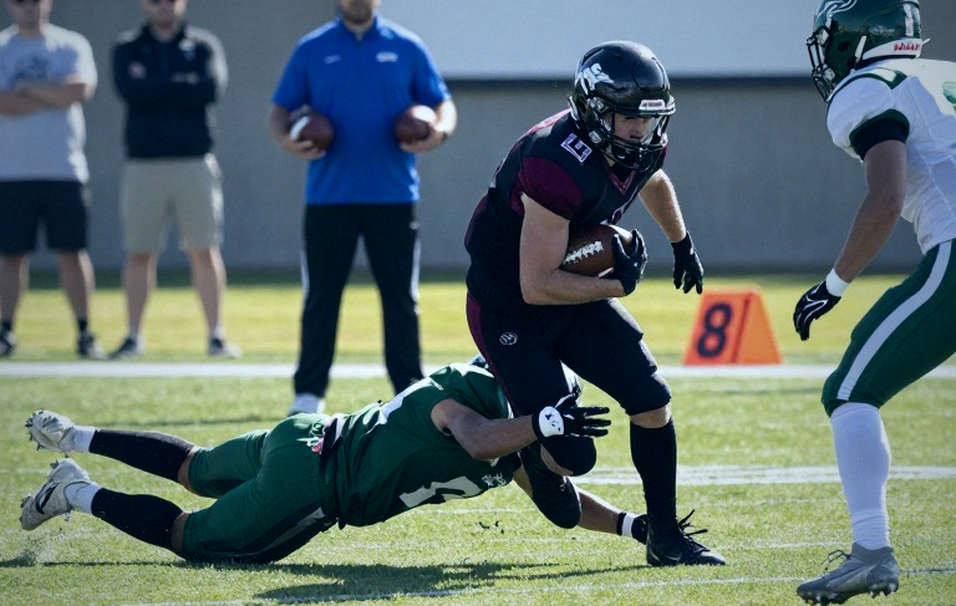
But one detail deserves to be paused over longer than the others: centre-back Dang Tuan Phong joined the squad late. His arrival was the final piece that brought the team to full strength before kick-off. I read that line three times, and each time it weighed a little more.
What cannot be said and what can be inferred
I have to be honest about the limits of the source. The analysis I have describes a match in progress — a 0-0 half-time scoreline — while the body of it is purely pre-match information. There is no detailed starting eleven, no formation, no pressing model, no possession data, no expected-goals figure, no PPDA. There is no named reporter, no specific attribution, no data provider. It is a preview republished under a live headline.
Based on my experience of watching matches across years working in both Vietnam and China, I recognised the pattern immediately. Sports portals in the region routinely reuse preview copy, attach a live-score headline to optimise visibility, and leave the body unchanged. Readers see "0-0 (H1)" and believe they are reading a live report. In reality they are reading a text written earlier — possibly hours earlier, possibly the day before.
What this means is that the analytical value of the source lies in the context, not the result. A 0-0 half-time score, standing alone, is a snapshot, not a trajectory. It says two teams did not score in forty-five minutes. It says nothing about who controlled the game, who was proactive, who changed what at the break, who is tiring, who is planning for the next fixture.
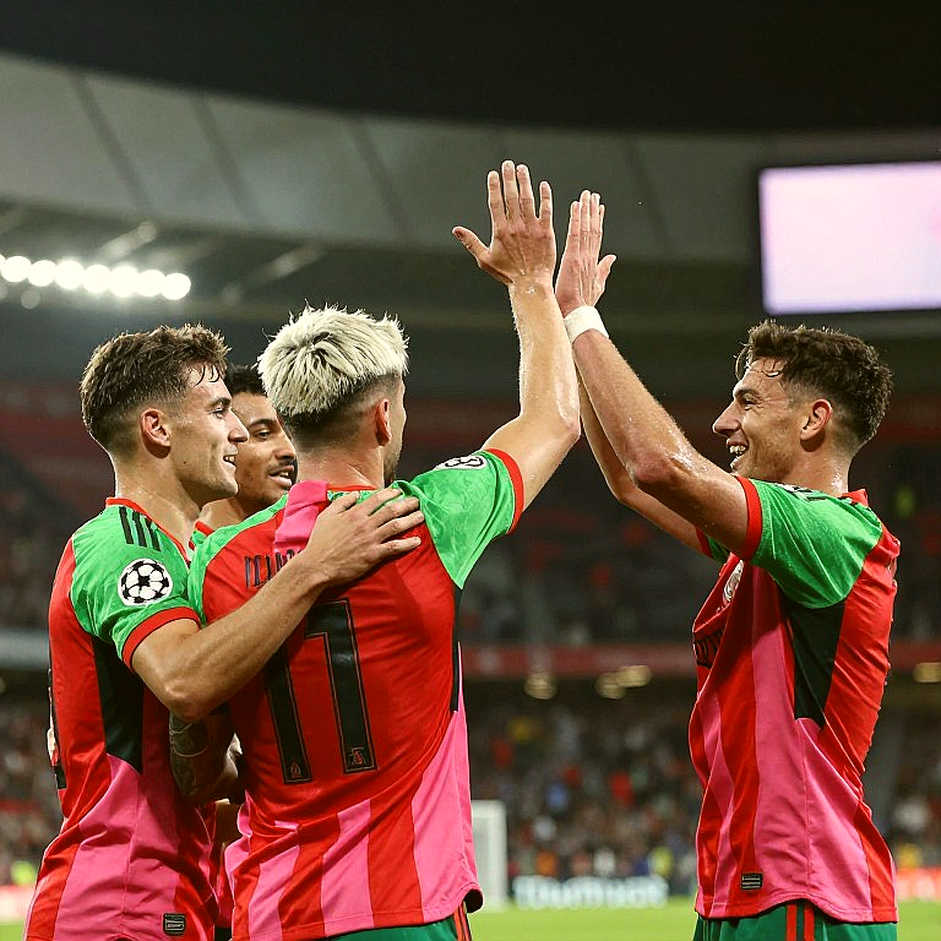
So the tactical analysis can only be inferred from preparation conditions. And those conditions say quite a lot.
When a team has only a few days of shared work, the staff cannot build a multi-layered attacking model. Everything that needs time to synchronise — off-ball movement patterns, three-man combinations, organised high pressing — is removed from the programme. What remains is what can be taught quickly: defensive block organisation, distances between lines, set-piece discipline, and transition between defensive and attacking states.
A team compressed by time defaults to being an organised defensive team. That is not a philosophical choice; it is a survival choice.
I think back to Nagoya. I picture a session running half an hour longer than planned, the staff splitting the pitch in two, one half drilling aerial defending, the other rehearsing two-man combinations on the flank. Sessions like that do not produce something beautiful. They produce something that does not collapse.
The late centre-back: when the last piece to arrive is the piece in the middle of the line
There is a category of detail I used to overlook when I was younger and can no longer overlook: the order of arrival.
When a striker arrives late, it is a problem for one combination drill. When a centre-back arrives late, it is a problem for the entire system.
The centre-back position depends on four things that only time can train: the partnership, the offside line, how one player steps out while the other covers, and the voice.
The voice is the most invisible and the most important. A centre-back does not only play with his feet. He plays with his voice. He tells the line to push up or drop. He calls the full-back inside. He names the midfielder who has left a gap behind him. Those sentences cannot be learned in two sessions. Only time creates that language.
Dang Tuan Phong arrived late. Two centre-backs playing together have not had enough repetitions to read each other. Of course they haven't.
Now combine this with the previous fact: the team trained in Nagoya for a short period, completed its tactical plans, and reached full strength before kick-off thanks to the return of one defender. The logical structure is clear. The team spent its final stretch of time completing personnel rather than completing the system. Personnel is the precondition. The system is what gets traded away.
What does this mean on the pitch? When a centre-back pairing is not yet synchronised, teams tend to choose simpler defensive solutions. That is the mark of a system protecting itself from error.
And this is where I pause to look a little more closely, because I hold a professional view I do not hide: the regional return to back-three systems is, in most cases, not a step forward in tactical thinking. It is a risk-management reflex. When a coach lacks the time to teach a back four how to cover for one another, a back three appears as an insurance layer. When a back four gets pierced and the price is a job, a back three becomes a way to keep reputations from burning.
I say this not to criticise back threes. I say it to point out that the number of centre-backs on the pitch is a decision about professional risk, and it is routinely presented as a decision about tactics. That confusion is one of the great blind spots of modern football commentary.
In Group C, the team with the least time will be the team most inclined toward the safest solution. And the team with the least time is usually the team whose players are most tightly held by their clubs.
Kuwait: a six-pointer and the weight of the word "must"
In any four-team group with two qualification places, there exists a concept I still prefer over drier analytical terms: the six-pointer. It is not a complicated calculation. It is the match whose result shifts both teams' positions within the group, pushing one side out of danger while charging the cost to the opponent's own points total.
For Vietnam and Kuwait, placed alongside each other in the second qualification band, the opening-round meeting is a textbook six-pointer.
But there is something to be said about how this match has been framed. The common line around it is that the team must take all three points. I read that and I understand what it is: a statement of determination. It expresses ambition. A statement of determination is not a statement of probability. A team saying it must win does not change any distribution of outcomes on the pitch.
The distinction matters because language shapes expectation. When the staff says "must win", the media repeats "must win", and the reader converts it into "will win". Three identical phrases at the level of words, entirely different at the level of meaning.
What I want to look at is the structure underneath. Kuwait is classified as a rival for the second slot. If that is accurate, this match is evenly matched in quality. In an even match, a 0-0 half-time is not a surprise requiring explanation. It is the default state that requires managing.
A 0-0 at the break tells me several things about the direction of the game. I can state this with confidence: the match is unfolding exactly as a preview would predict. If the second half passes without the score changing, the value of the Uzbekistan fixture rises considerably. And when the value of a match rises, the pressure on the coaching staff rises with it. Performance metrics may stay silent, but the atmosphere in a meeting room does not.
I think about Dinh Hong Vinh. His name appears attached to the team's objective. That is a way of personalising responsibility: not "the team" must win, but "the coach and his players" must win. It reads beautifully as rhetoric and weighs heavily professionally. He is the person placed at the centre if the plan fails. Nobody else.
Uzbekistan in the final round: a beautiful plan and the trap inside it
I want to spend this section on the thing that makes many youth teams fall, and it is not the opponent.
Vietnam's plan is to take points in the first two rounds to enter the final fixture with an advantage. That is a sound plan. But it depends on one assumption: the first two rounds must go well. If the assumption holds, everything is fine. If it fails — a draw with Kuwait, or draws with both Kuwait and the Philippines — the final match against Uzbekistan becomes a life-or-death fixture in which the team must beat a stronger side. In that case, the team is forced to play in a way foreign to its own nature, and usually in the worst possible way: having to open up, push high, attack. A low-block team does not open the pitch well.
Every plan built on taking points early carries a trap inside it: if taking points fails, the entire burden falls on the hardest match.
I have seen that trap many times. I remember a match in Kazan in June 2026. Rain. Germany stood in the rain like wax figures, and Manuel Neuer ran back toward an empty goal like a man at the end of the road. I wrote about that night, called it the night of former champions, and the newsroom received dozens of complaints that I was being maudlin. My editor, Chen Mo, published it anyway and told me something I have carried ever since: football is not only a tactical diagram.
I tell this story not to talk about Germany. I tell it to say that a team forced to play against its own nature usually loses before the referee blows the whistle. South Korea did not beat Germany because South Korea was stronger. South Korea won because Germany was forced to play like a team that was not Germany.
With a U23 side, that effect multiplies many times over.
Personnel, contracts, and what gets wrapped in silver foil
There is an aspect of the Asian Games few people write about, and I think it matters more than the group table: academies, training rights, and the transfer value of young players.
ASIAD has no prize money. No transfer cash flows. No continental cup slot attached in the club sense. In purely economic terms, the tournament generates no transactional value. Its value is reputational.
But reputation, in youth football, is a very concrete asset. A U23 player who impresses in the group stage of a continental games will enter the field of vision of regional markets: J-League, K-League, Thai League, and more recently the big-spending clubs of the V.League itself. A handful of good matches can change perceptions of a player's ceiling. And perceptions of a ceiling are what price a contract.
ASIAD's real balance is not measured in medals. It is measured in whether a twenty-year-old can move from "potential" to "worth buying" within ten days.
Conversely, an early exit, or an unremarkable group stage, suppresses the market value of an entire cohort in the short term. That is why I always look at tournaments like this not only with a spectator's eye, but with the eye of someone who reads contracts.
A transfer is not a transaction; it is a parting wrapped in silver foil. I wrote that line in a piece about the transfer market years ago and I still stand by it, even applied to a youth national team. Because behind every assembly and every disbandment, there is a club doing arithmetic, an agent making calls, and a twenty-year-old trying not to think about his future while focusing on a pass.
In Vietnam, the risk of losing players abroad at U23 level is low to medium. The career flow of young Vietnamese players largely remains domestic, or at most a move to regional leagues. That is a structural feature of the football economy, and it is simultaneously a safety and a limitation.
On the club finance side, I have to be blunt: there is no data. No broadcast revenue, no commercial revenue, no wage bill, no net debt. No player salaries, no transfer fees, no renewal clauses. Anyone offering a specific figure here is inventing it.
But there is one cost I can state with certainty: the camp in Japan. Flights, hotels, board, domestic transport for an entire delegation. That is a real expenditure, and it shows the federation chose to bet on acclimatisation rather than saving. I respect that choice, even knowing it is not enough to compensate for the time lost.
Rules, age, and the battle that is not on the pitch
There is a rule system I think deserves clearer articulation in regional analysis: men's football at a continental games operates an age-restriction mechanism, usually accompanied by a limited number of over-age registrations. Verifying exactly which eligibility cycle applies to this specific edition is work that must be done, and in the analysis I have, that information is unconfirmed.
That matters for two reasons. First, an administrative error on eligibility can produce the gravest consequence: forfeiture of a result. Low probability, very high impact. Second, when a squad is built around an age rule, every personnel calculation must be re-verified from scratch and never assumed.
But the real structural tension of this tournament is not in the rules. It is in the calendar.
ASIAD does not fall inside FIFA's international windows. That means clubs are not obliged to release players. And the practical consequence of that is precisely the story we began with: a prolonged domestic calendar left the national team without centralised time. It is a club-versus-country conflict translated into the language of lost preparation days.
I think this is the point very few regional commentaries state plainly. People criticise coaches for teams lacking cohesion, forgetting that clubs have no obligation to cooperate. A tournament outside the FIFA window always produces what I call administrative attrition.
Re-reading the group through probability: what is the team's real potential?
I want to restore honesty to expectations.
With the structure of Group C — Uzbekistan as favourite, the Philippines weakest, Kuwait and Vietnam contesting the remaining slot — Vietnam's realistic objective is second place. Not first. Second.
I do not say that to diminish the team. I say it to position it. This is a youth side in Asia's second band: capable of beating peers, capable of upsetting stronger opponents in a single match, but not yet structurally favoured over a Central Asian power.
In youth football, structural gaps are far blurrier than in the senior game. That is what makes youth tournaments both compelling and hard to predict. But "hard to predict" does not mean "without patterns". The pattern remains: better preparation wins, better organisation wins, and preparation plus organisation wins almost every time.
I look at squad market value for comparison data. There is none. Financial strength. None. Academy output. Here there is a qualitative signal: Vietnamese youth football has a strong regional pipeline, level with or above Kuwait and the Philippines, and perhaps below Uzbekistan in the recent cycle.
My conclusion: if Vietnam finishes second in Group C, that is a result consistent with its level, not a miracle. If Vietnam tops the group, that is an achievement beyond target. If Vietnam is eliminated, that is an outcome inside the error margin of a four-team group with two qualifying places.
This is the crux of expectation management, and I will say it plainly: a U23 side eliminated in the group stage should not be treated as a historic failure.
The counterpoint: the blind spot of collective memory
Now I come to my favourite part, and the part that draws the most reaction.
In Vietnam, the memory of a golden youth generation has become a benchmark. It is beautiful. It deserves to be remembered. But if that benchmark is used incorrectly, it becomes a moral lever aimed at every youth team that comes after.
Memory has a dangerous mechanism: it erases conditions. We remember results and forget context. We remember a team going deep in a tournament and forget that team had a different centralised-preparation budget, a different development cycle, a generation of players that happened to mature at the same time. When we project that memory onto a new team, we place one generation beside another in a comparison whose variables have all been deleted.
I call that the blind spot of collective memory.
And this blind spot has a concrete effect on a team in preparation. It creates a pressure I call asymmetric expectation: victory is treated as self-evident, defeat as collapse. There is no middle zone. No room for "today the team played to the limit of its conditions".
I have seen this kind of pressure in the eyes of young players. Not in the eyes of those accustomed to it, but in the eyes of players barely twenty, sitting on the bench, watching their coach, trying to guess whether they will get on. They do not need extra weight. They need air.
This is why I always turn my lens elsewhere. When a match is played, the majority turn toward the goal, toward the scorer. I turn toward the touchline. I want to watch the creator of space — the one who runs without the ball to drag a defender out of position, the one who throws himself into a duel nobody names him for afterwards. They are the ones carrying the match forward, and they are the ones the official scoreline erases from our memory.
I remember an October night in 2026 in Shenzhen. I stood in the stands with twenty-eight thousand people. In the 94th minute, Harold Preciado headed in a 3-2 winner against Shanghai Shenxin, returning Shenzhen FC to the Chinese Super League after seven years. I did not shout. I saw an old man collapse into his seat and cry. That night I wrote two thousand words about him, about the smell of flare smoke, about the embrace of strangers. My editor Chen Mo published it and sent me a line I still remember verbatim: you write football like a love letter.
That memory taught me something about reading tournaments. Every group is a collection of fates. In Shenzhen, that man's fate was defined by a 94th-minute goal. But it was also defined by seven years. And seven years never appeared on the scoreboard.
In Nagoya today, there is a player who sat on the bench for the first forty-five minutes. He is a shard of broken mirror. If the match ends and he does not get on, he will vanish from every report. But he is still there, still in the squad, still part of this generation. A player's youth is the only thing that cannot be contractually extended. That is why I do not write about matches as though they could be replayed.
Forty-five minutes that say nothing, and everything
I return to the only number of the match.
0-0 at the break. I could write an entire article circling it, but I will not, because doing so is laziness. 0-0 is not a story. It is a pause.
What I can say about this pause is that it confirms the hypothesis of an even match. The fixture between two sides placed alongside each other in the second qualification band has unfolded exactly according to its structure. There is nothing abnormal about a goalless first half.
What I can add is that if the match continues in a balanced direction, the value of the final round rises. And when the value of the final round rises, every calculation by the staff must account for a scenario they do not want: playing a decider against Uzbekistan.
But I want to add one more thing, and I think it is the most important.
During those forty-five minutes, in the stands, a man folded a teamsheet and sat still. He did not sing, did not shout, did not stand. He just sat. If you filmed the stands and fast-forwarded, you would skip him. But if you look for him, you will see he did not leave after the half-time whistle.
I have learned one thing after years in this profession: it is not the match that decides whether a fan leaves, it is the result that decides whether a fan leaves. These are very different things. A match can be bad. A result can be bad. But people walk away when the result becomes all they remember.
The pitch is never silent; only the person sitting still to listen is. In Nagoya, one man sat still. And a young team was trying to prove that two years of preparation was not meaningless.
What I believe and what I do not know
I want to split this into a list of what I have established and what remains open, not to lecture, but to reread myself.
What I believe is established: the tournament is ASIAD 20, men's football, Group C, containing Vietnam, Kuwait, the Philippines and Uzbekistan. Uzbekistan is the favourite. Kuwait is a direct rival. The schedule gives Vietnam the two more winnable fixtures first. Coach Dinh Hong Vinh said the team must beat Kuwait and needs points to hold an advantage before the final round. Centre-back Dang Tuan Phong arrived late. The team trained in Japan, adapted to climate and pitch, completed tactical plans, and reached full strength before kick-off. The opening match stands at 0-0 at half-time.
What I infer and what should be verified: the regional wave toward back-three systems is largely a risk-reduction response to professional pressure rather than a leap in thinking. A centre-back's late assembly more often reflects club-release friction than a physical issue. The team will likely play a mid-to-low block against Uzbekistan and a more proactive game against Kuwait and the Philippines.
What I do not know: who starts. Which centre-back partners whom. Possession, chances created, passes into dangerous areas. The true fitness of any individual. How the age-eligibility conditions are being applied. The internal mood. And most importantly: the result.
I list these not because I want to be safe. I list them because in this trade, people routinely pretend to know more than they do in order to sound certain. That is a disease of sports commentary.
What I choose to remember
I do not think this match will be remembered. It is an opening group fixture. But I also think the history of youth football is rarely recorded in large moments. It is recorded in small places: a session extended by thirty minutes in Nagoya, a centre-back arriving late and immediately having to get up to speed, a coach standing at the technical area telling a nineteen-year-old to stay calm.
I have gone to stadiums for years and always looked for the same thing. I do not go to find goals; I go to see what people believe in. A youth team entering a group stage always carries a very specific belief, and that belief rarely appears in the news feed. Some teams believe this is a launchpad. Some believe it is an obligation. Some believe winning or losing is not a big deal. Seeing which belief a team chooses is the best way to guess how far it goes.
To me, ASIAD is a map for getting lost on the way home. It shows you roads that lead nowhere, and sometimes shows exactly the roads nobody notices.
What I want people to take from this piece is patience with what has not happened yet. A youth team should not be judged by one half. It should be judged by how it handles what did not go to plan.
If Vietnam holds its rhythm and does not concede against Kuwait, the team enters the Philippines fixture with exactly one task: to ensure the final round does not become a must-win confrontation with Uzbekistan.
Everything would be far simpler if the team scores. Goals are the only currency accepted on the table. And goals, unfortunately, are the one thing you cannot train more of once the time has run out.
I close the notebook here, between the first and second halves of a match I do not have enough data to judge. In the stands, the man has just reopened the teamsheet, folded it along a different crease, and pushed it back into his coat pocket. The second half is about to begin. Whatever the result, I will not shout. I am here to listen.