
Lakshya Sen's Road to Gold at Asian Games 2026: A Beautiful Blueprint and a Head-to-Head Test
Câu trả lời cốt lõi: Lộ trình tới vàng của Lakshya Sen tại Asian Games 2026 đi qua năm đối thủ, nhưng dữ liệu đối đầu cho thấy anh ở thế cửa dưới ở bốn trong năm trận và đã thua ở lần chạm trán gần nhất trước ba người. Đây là một tay vợt có thể lật kèo, không phải ứng viên số một theo dữ liệu. Sự kiện then chốt: - Asian Games 2026 diễn ra ở Aichi–Nagoya (Nhật Bản); nội dung đồng đội đấu trước nội dung cá nhân đơn nam. - Lakshya Sen vào thẳng vòng 32 nhờ đặc cách (bye), nhưng đã tích lũy tải trọng thi đấu khi Ấn Độ vào bán kết đồng đội. - Đối đầu trực tiếp: thắng Loh Kean Yew 7–4, cân bằng 1–1 với Panitchaphon Teeratsakul, thua Jonatan Christie 3–4, thua Shi Yuqi 2–5, thua Kunlavut Vitidsarn 5–8. - Sen thắng Shi Yuqi tại All England 2026 nhưng thua Loh ở Asia Team Championships tháng 2/2026 và thua Teeratsakul ở tứ kết Indonesia Masters. - Bản phân tích không cung cấp số liệu về xếp hạng, phong độ mùa hay chỉ số kỹ thuật của chính Sen. Nguồn và ngày: Khel Now (Ấn Độ), bài dự phóng đường tới huy chương vàng Asian Games 2026; các số liệu xếp hạng và đối đầu chưa được đối chiếu độc lập. Hỏi đáp liên quan: Hỏi: Vì sao lộ trình của Lakshya Sen được xem là khó? Đáp: Bốn trong năm đối thủ dự kiến hoặc dẫn trước trong đối đầu trực tiếp hoặc thắng ở lần gặp gần nhất, theo dữ liệu bài viết. Hỏi: Yếu tố nào bị đánh giá thấp nhất trong bản dự phóng này? Đáp: Tải trọng thể lực tích lũy sau nội dung đồng đội, một biến số không xuất hiện trong bảng đối đầu. Hỏi: Bốc thăm chính thức có làm thay đổi kết luận không? Đáp: Có, đây là biến số có sức nặng lớn nhất và mọi tính toán độ khó phải được vẽ lại sau khi có nhánh đấu thật.
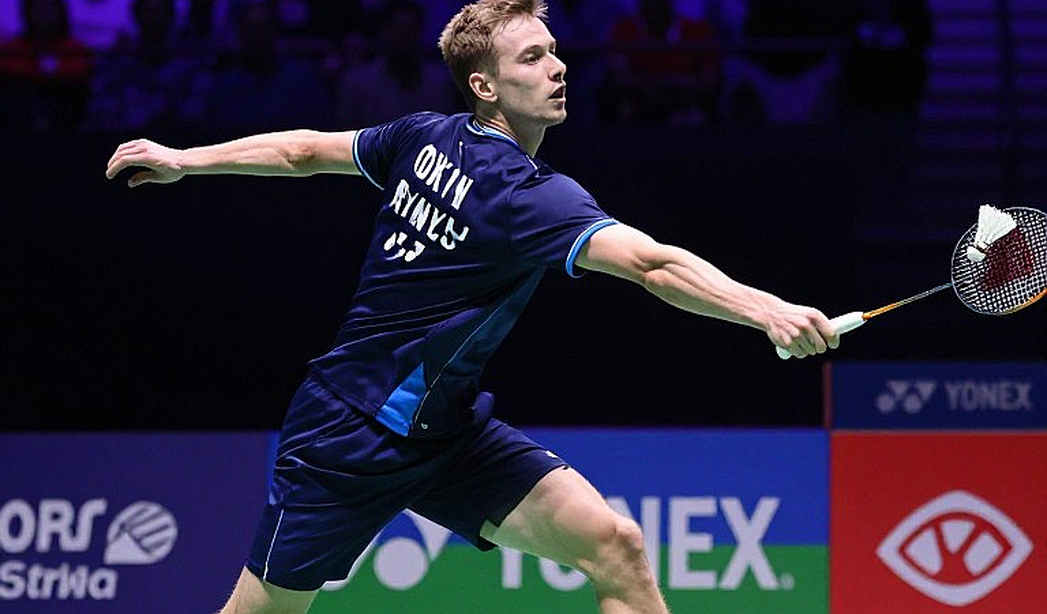
In the five matches drawn along Lakshya Sen's road to gold at the Asian Games 2026, there is one number worth pausing on and examining closely: 3–4. That is the head-to-head record between the Indian shuttler and Jonatan Christie, the Indonesian regarded as the top seed in the men's singles draw. That number sits in the quarter-finals — not the final, not the semi-final, but the quarter-finals.
Behind that number lies an entire map. In the round of 32, Sen faces Loh Kean Yew (Singapore), whom he leads 7–4 but lost to at the Asia Team Championships in February 2026. The round of 16 pits him against Panitchaphon Teeratsakul (Thailand, world No. 17), a rival tied at 1–1 who won their most recent meeting. The quarter-final brings Christie. The semi-final brings Shi Yuqi (China, No. 6), who leads 5–2 despite Sen beating him at All England 2026. And the final brings Kunlavut Vitidsarn (Thailand, No. 3), who leads 5–8.
Skimmed, this reads as an epic journey. Read carefully, it is a head-to-head examination in which Sen is the underdog across most of the stops. I have a habit of verifying before concluding, so I will not rush to call it a "road to gold." I will call it a blueprint that needs re-measuring.
Context: a filtered tournament, a compressed run
The Asian Games is not a BWF World Tour event. It is a multi-sport continental Games organized by the Olympic Council of Asia, where national delegations compete for prestige as much as for ranking points. That creates two very concrete tactical consequences.
First, the field is filtered by continent. Non-Asian players — and at this moment, most of the biggest names in men's singles — are absent. In other words, this is an elite tournament but not the whole global picture. The "No. 1," "No. 3," and "No. 6" labels in the blueprint remain world rankings, but placed in a field consisting only of Asian nations.
Second, the Asian Games 2026 stages the team event before the individual event. This matters far more than it appears. Sen enters the round of 32 with a bye, meaning he avoids one match compared to unseeded entrants — a small but real advantage. A timely rest is always valuable in the closing stretch of a compressed tournament.
But that advantage is eroded by the tournament structure itself. India reached the team-event semi-finals before the individual event began. In other words, Sen accumulated competitive load before the individual rounds started. Five knockout rounds within roughly five to six days after a demanding team campaign: that is a physical-load problem any blueprint, however beautifully drawn, must account for.
And this is where I want to be blunt: every blueprint of a road to gold is logically right and probabilistically wrong, until the shuttle is tossed up and lands.
Head-to-head analysis: five doors, three locks
When I follow top-level matches, I always place head-to-head records ahead of overall records. The reason is simple: a player may rank No. 5 in the world, but if he loses to a specific opponent two years in a row, that opponent has found the key. In Sen's case, the head-to-head record shows a notable pattern.
First, the easiest match on paper is the opening match. Sen leads Loh Kean Yew 7–4, a clear edge. But that edge was eroded in their most recent meeting, when Loh won at the Asia Team Championships. In head-to-head sport, the most recent win matters more than the aggregate historical record. A player who believes he has just beaten this opponent walks onto court with a completely different mindset. So I classify the round of 32 not as an "easy match" but as a "bait match" — win it and you build momentum; lose it and the whole blueprint collapses.
Second, the round of 16 against Teeratsakul is the silent lock. A 1–1 record sounds balanced, but their last meeting, at the Indonesia Masters quarter-final, saw Teeratsakul win in straight games. Not a tense three-game battle, but a decisive win. That is the signal the head-to-head table does not state but the match log states clearly: the form gap is tilting toward the young Thai.
Third, from the quarter-final onward, the blueprint becomes a continuous climb. Christie leads 3–4, Shi leads 5–2, Vitidsarn leads 5–8. Combined, Sen's record against that group is 10 wins and 14 losses. That is not the record of a title favorite.
This is where I want to separate two kinds of judgment, because I always stratify risk in my assessments. If the question is "Can Sen win?" the answer is yes. Any top-20 player can win a week if the draw breaks his way and his form peaks on time. But if the question is "Is Sen the No. 1 favorite by the data?" the answer is no. He is a player who can pull off an upset, not one expected to win.
The difference is not semantics. It decides how the entire tournament should be read.
The biggest gap is not on court
I am naturally sensitive to gaps — both on court and in prose. And in the analysis of Sen's path, the biggest gap is not on the court. It sits inside the analysis itself.
The first gap: not a single number about Sen himself. The blueprint says who he will face but not where he sits in the rankings, how many points he is defending, or what his season form looks like. The opponents have numbers. The protagonist does not. A blueprint in which every opponent is measured but the subject is not is an incomplete blueprint.
The second gap: not a single technical data point. No smash speed, no unforced-error rate at deciding points, no rally lengths. Only a generic suggestion that Sen must "disrupt Christie's rhythm and maintain his intensity." But that statement applies to any opponent. It is not tactics; it is a slogan.
The third gap, and this is the real tactical gap: the question of fitness after the team event is handled with one optimistic sentence. The blueprint says Sen has "extra rest to recover." But in reality, a team-event run to the semi-finals often drains more than it restores. That is when I return to something I learned during the years when tournaments were frozen: when there are no matches to watch, the data still speaks. And the data on competitive load says that five knockout matches after a team event is a physical gamble.
Counter-intuitive angle: the obstacle is not the players, it is the order
This is the part I want to give the most words to, because it is the blind spot of most projections.
People often think the difficulty of a bracket lies in the names of the opponents. I disagree. Difficulty depends on the order of appearance.
Imagine two scenarios. Scenario A: Sen faces Vitidsarn in the round of 16, Shi in the quarter-final, Christie in the semi-final, and Teeratsakul in the final. Scenario B: the same set of opponents, but reversed in order as in the original blueprint. Same group of players, same number of rounds, same total difficulty on paper. But these two scenarios are not alike at all.
In single elimination, every match leaves residue. A tense three-game match leaves tired muscles, tired legs, and a tired mind. If the hardest matches come early, the player enters the later rounds with heavier legs. If they come late, he can conserve energy in the early rounds. So when I read a blueprint like Sen's, the first thing I check is not who, but in what order.
And this blueprint arranges difficulty in ascending order, straight out of the textbook. But that is precisely the trap. Because passing each round costs a portion of fitness, until the hardest match — the final against Vitidsarn — arrives when the body is depleted. Meanwhile a rival like Vitidsarn, if he takes a shorter route, walks into the last match with fresher legs.
That is why I put it plainly: a gap never disappears; we simply have not been patient enough to see it. In this blueprint, that gap is accumulated fitness — a variable that does not appear in the head-to-head table but decides the outcome in the final rounds.
There is a deeper detail. Four of Sen's five projected opponents lean attacking — Loh on speed, Shi on power, while Teeratsakul and Vitidsarn lean defensive-counterattacking and retrieval-based. Only Christie is the rhythm-controlling type who wins with deception and net craft. So if the blueprint comes true, Sen will have to switch between two entirely different coping modes within a single week: against fast attackers by slowing down and controlling errors, then against retrievers by accelerating and finishing early. Those two modes require two different sets of legs. Not every player can switch between them within a few days.
A lesson from a time I predicted wrong
I am not someone who is always right. In 2026, I used my spatial model to analyze a quarter-final and concluded the opposite of what happened. I was mocked as a blind fortune-teller online. Two weeks later, I wrote another piece, about a transfer, and this time I was right. What I learned was not that I am good, but that I must separate two kinds of writing: analysis of a single match and assessment of a long-term trend. They carry different levels of uncertainty, so they must not be written in the same confident tone.
Applied to Sen's case: this is an analysis of a short series of matches, highly uncertain. A different draw could change the entire picture. Every diagram is a lie, but a lie precise enough is called tactics. The Indian outlet's blueprint is such a diagram — precise enough to use as a hypothesis, but not precise enough to use as a prediction.
And I must add this, because I believe in pointing out my own limits: if the real draw differs greatly from this blueprint, the entire analysis above could collapse in a single morning. That is the nature of knockout sport.
The view of a working commentator
I came out of live commentary on major badminton events, so I have a habit different from many: I always see a tournament as a current, not a series of discrete matches. That current has three streams running in parallel: form, fitness, and psychology.
Sen's form in this blueprint is an unknown. We know he beat Shi at All England, but we do not know how, how long it took, or at what cost. We know he lost to Teeratsakul at the Indonesia Masters, but not whether he was outplayed or self-destructed. Those two causes lead to two completely different remedies.
Fitness is the most underrated stream. If I follow this tournament, I will track one crude but honest indicator: the duration of each match. If Sen wins the round of 32 and the round of 16 in quick straight games, his fitness remains intact for the last three. If he grinds out three-game wins, his chances in the semi-final and final thin out considerably, regardless of his talent.
Psychology is the loudest stream but the hardest to measure. At multi-sport Games, the pressure differs sharply from World Tour events. You are not only facing an opponent; you are facing your whole delegation, the expectations of an entire sport in your country. For a player whose home media has drawn a "road to gold," that pressure multiplies. At the top, people remember the winning smash; I remember the gap between the player's feet before that smash left the racket. And that gap is sometimes created by psychology, not technique.
Signals worth tracking before the real match
Though the blueprint is only a hypothesis, I still note a few signals to track, because that is the only way to verify a judgment rather than merely believe it.
One, the official draw. When the organizers release the real bracket, every difficulty calculation must be redrawn. This is the single heaviest variable.
Two, fitness after the team event. If Sen enters the individual event with heavy legs, the risk of an early exit rises markedly.
Three, the duration of the early matches. This is the earliest and most objective indicator of how much energy he has left for the final climb.
Four, the trend of Thai men's singles. Thailand having two players in the leading group — Vitidsarn at No. 3 and Teeratsakul at No. 17 — is a signal of rising depth. A sport with two spearheads rather than one is always harder to lock down.
Five, the open question about ranking value. Until there is official information, I must label every conclusion about how a medal here affects a player's position as "pending verification." This is the kind of detail I never guess at.
What I think after putting down the pen
People remember medals; I remember distances. People remember the final shot; I remember the tired footsteps before it. Lakshya Sen's road-to-gold blueprint is a beautiful media product — it gives Indian fans a story to believe in. And I do not mean to diminish it. I only want to read it in the language I trust: the language of gaps.
The gap here is not in Sen's skill. A player in the mature phase of his career, who has beaten the best, can absolutely win five matches in a week if everything lines up. The gap lies in the silence of the data about him, in the unverified optimism about his fitness, and in the assumption that the draw will unfold exactly as drawn.
If I am wrong, I want to be wrong about this: underestimating the upset capacity of a player in his prime. But if I am right, what worries me most is not a loss. What worries me is how the story of a "road to gold" will be read as a promise, then become a burden placed on someone who never promised anything.
Perhaps the most telling thing about knockout tournaments is this: the court does not award medals to the most beautiful blueprint. It awards them to whoever, in one particular week, keeps the gap behind his back the smallest.